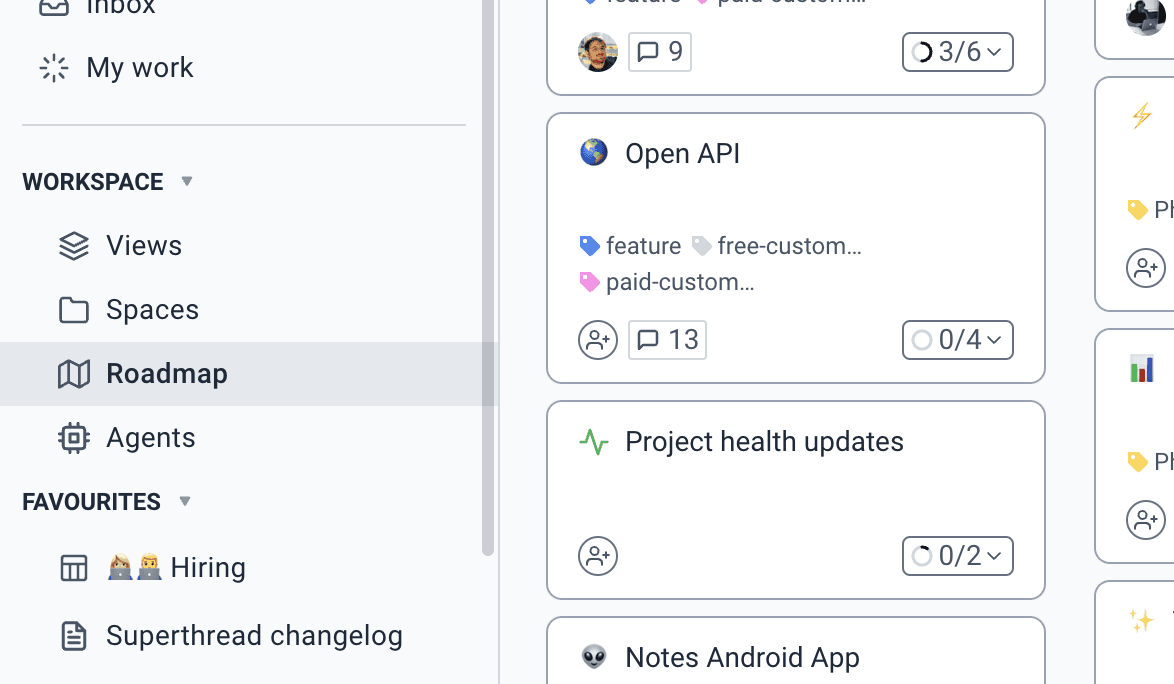
Keep the roadmap tied to real work
Plan larger initiatives as projects, connect them to the tasks underneath, and see progress without maintaining a second version of the plan.
Learn more about Keep the roadmap tied to real work
Roadmaps, specs, sprints, code, meetings, and delivery stay connected. Product and engineering can move quickly without losing the reason behind the work.
One delivery record, from the first decision to the final pull request.
Plan larger initiatives as projects, connect them to the tasks underneath, and see progress without maintaining a second version of the plan.
Learn more about Keep the roadmap tied to real work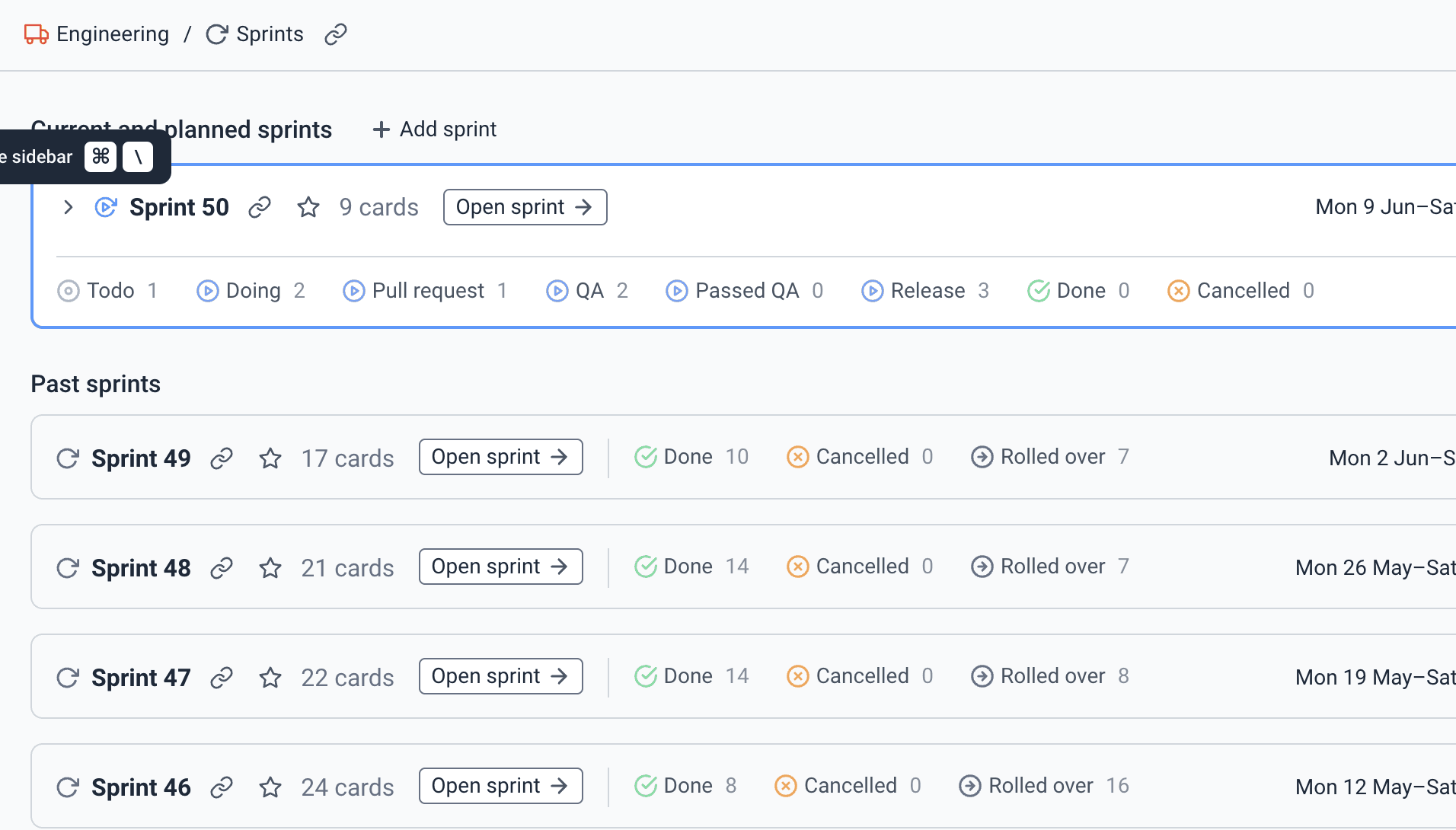
Shape the backlog, plan the sprint, and carry unfinished work forward. Tasks, subtasks, estimates, and ownership stay visible from planning through review.
Learn more about Run sprints without extra ceremony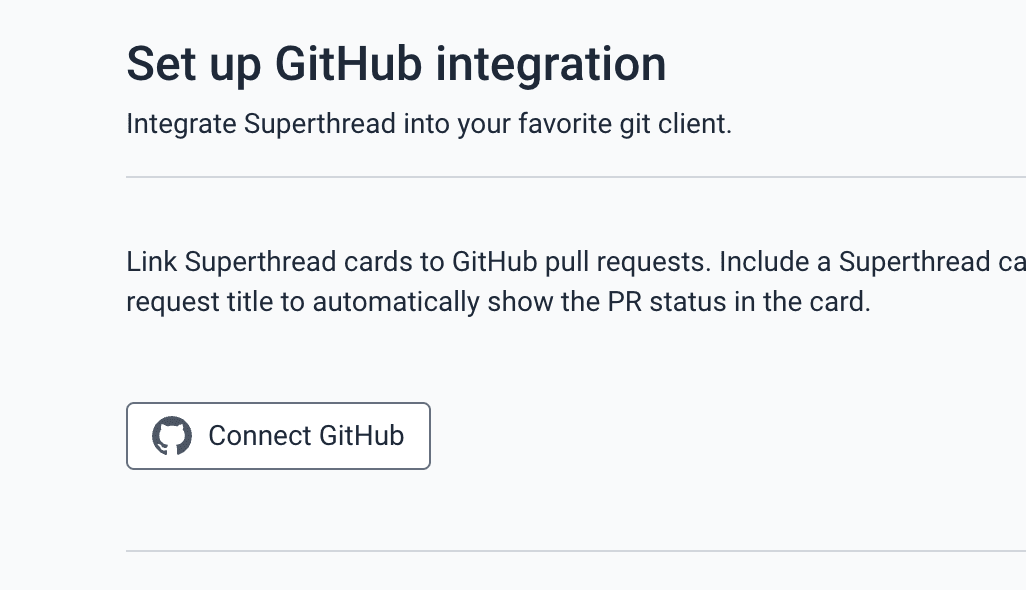
Link pull requests to cards and update work from the development flow. Slack notifications keep the wider team informed without asking engineers for another update.
Learn more about Connect delivery to GitHub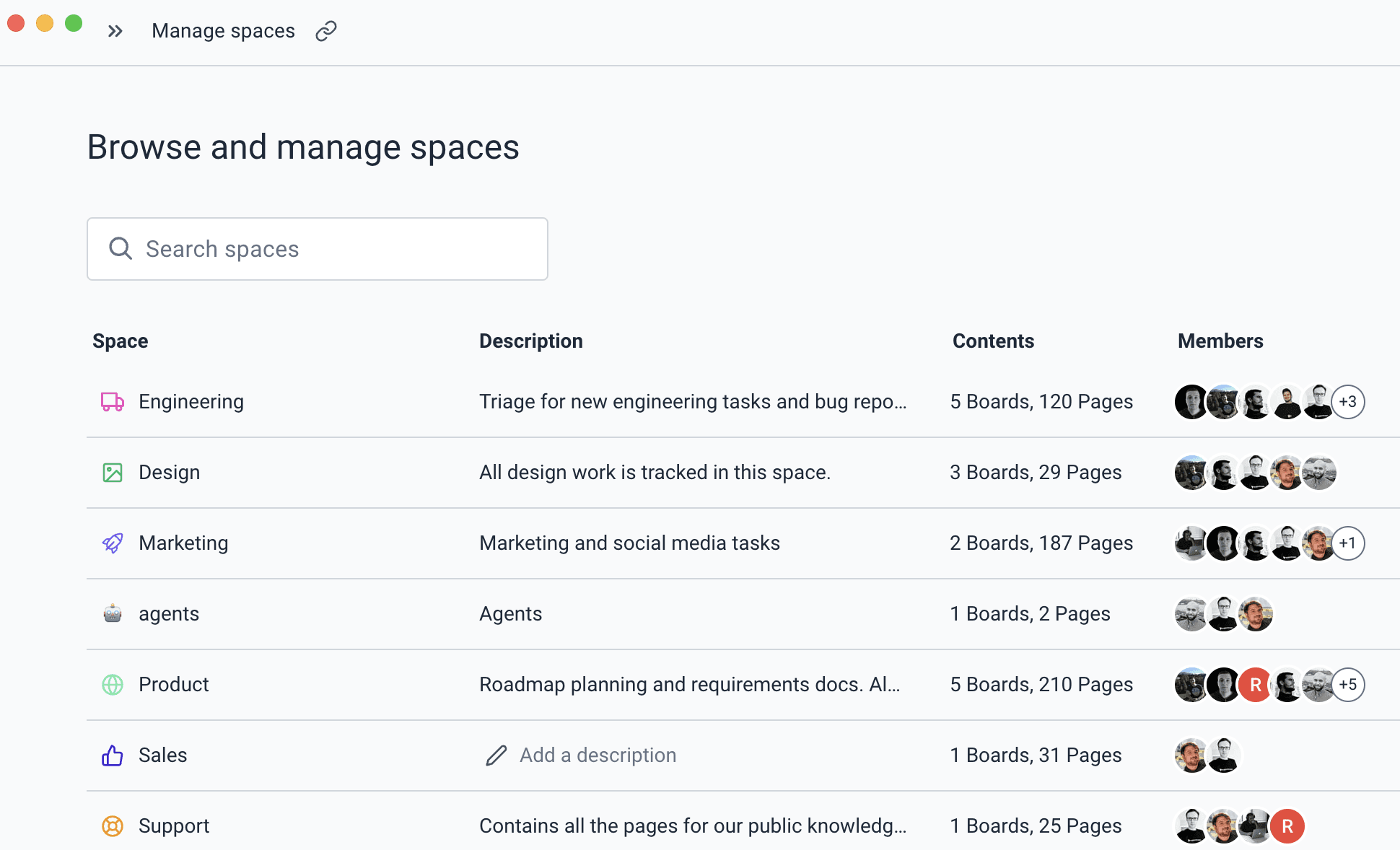
Keep product briefs, technical decisions, research, and release notes in pages linked directly to projects and cards. The why does not disappear when implementation starts.
Learn more about Write the spec beside the task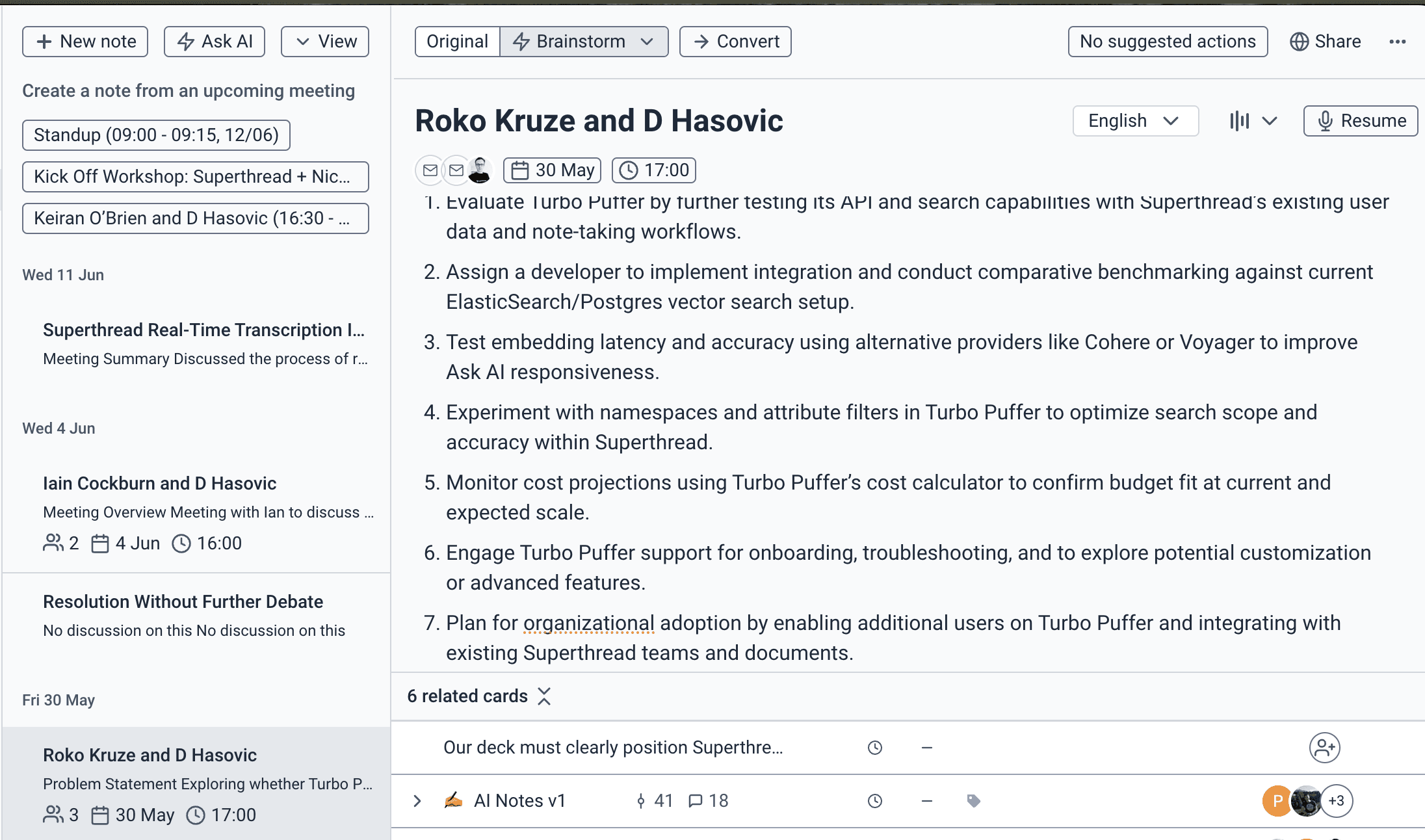
Capture discovery calls, planning sessions, and retrospectives. Keep the transcript, shape the notes, and create tasks while the context is still fresh.
Learn more about Turn product conversations into follow-up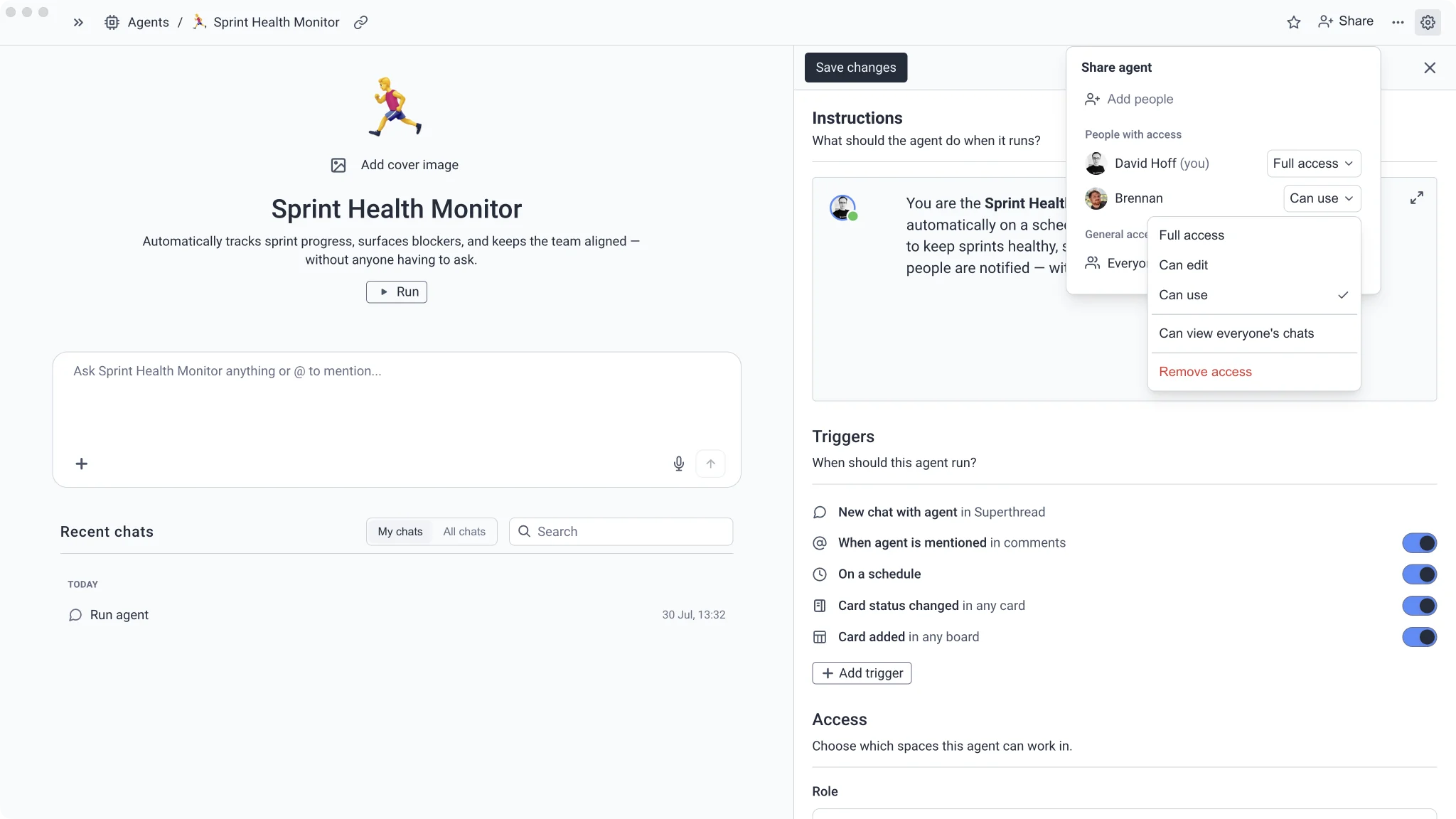
Create agents that monitor sprint health, surface blockers, prepare project updates, or answer questions using the work and knowledge already in Superthread.
Learn more about Build agents around your delivery process
“We've centralised task boards from disparate tools into a single, slick workflow. It's saving us time and restoring some of the joy of creating tickets!”














Give an agent a delivery job, the product and engineering spaces it needs, and a trigger from the workflow. It can inspect the context and act in the same system as the team.
Find blockers, missing estimates, unclear ownership, and work unlikely to finish.
“Check this sprint for blockers, missing estimates, unowned work, and tasks unlikely to finish. Create a concise health report and the necessary follow-up.”
Time saved2–3 hours/week
Group evidence from research notes, forms, meetings, and product tasks.
“Group the latest feedback into themes, link the supporting evidence, and show which themes already have related roadmap or discovery work.”
Time saved2–3 hours/week
Review linked work, documentation, decisions, and unresolved blockers before release.
“Review this release project and build a final readiness checklist. Flag missing owners, open decisions, incomplete documentation, and unresolved work.”
Time saved1–2 hours/week
Check reproduction details, find related work, and route a complete report to the right board.
“Review this bug report for reproduction steps, expected behaviour, impact, and useful files. Find related work and create a triage task if the report is complete.”
Time saved1–2 hours/week
Turn completed release work and decisions into a clear, factual first draft.
“Draft release notes from completed tasks and linked project decisions. Group changes by user outcome and exclude internal-only implementation details.”
Time saved1–2 hours/week
Each discipline gets the detail it needs while working from the same plan.
Connect research, decisions, roadmaps, and delivery without rewriting the context.
Work from a clear backlog and keep cards in step with the code moving through GitHub.
Keep briefs, feedback, files, and implementation work together from exploration to release.
See which initiatives are moving, where delivery is stuck, and what needs a decision.